
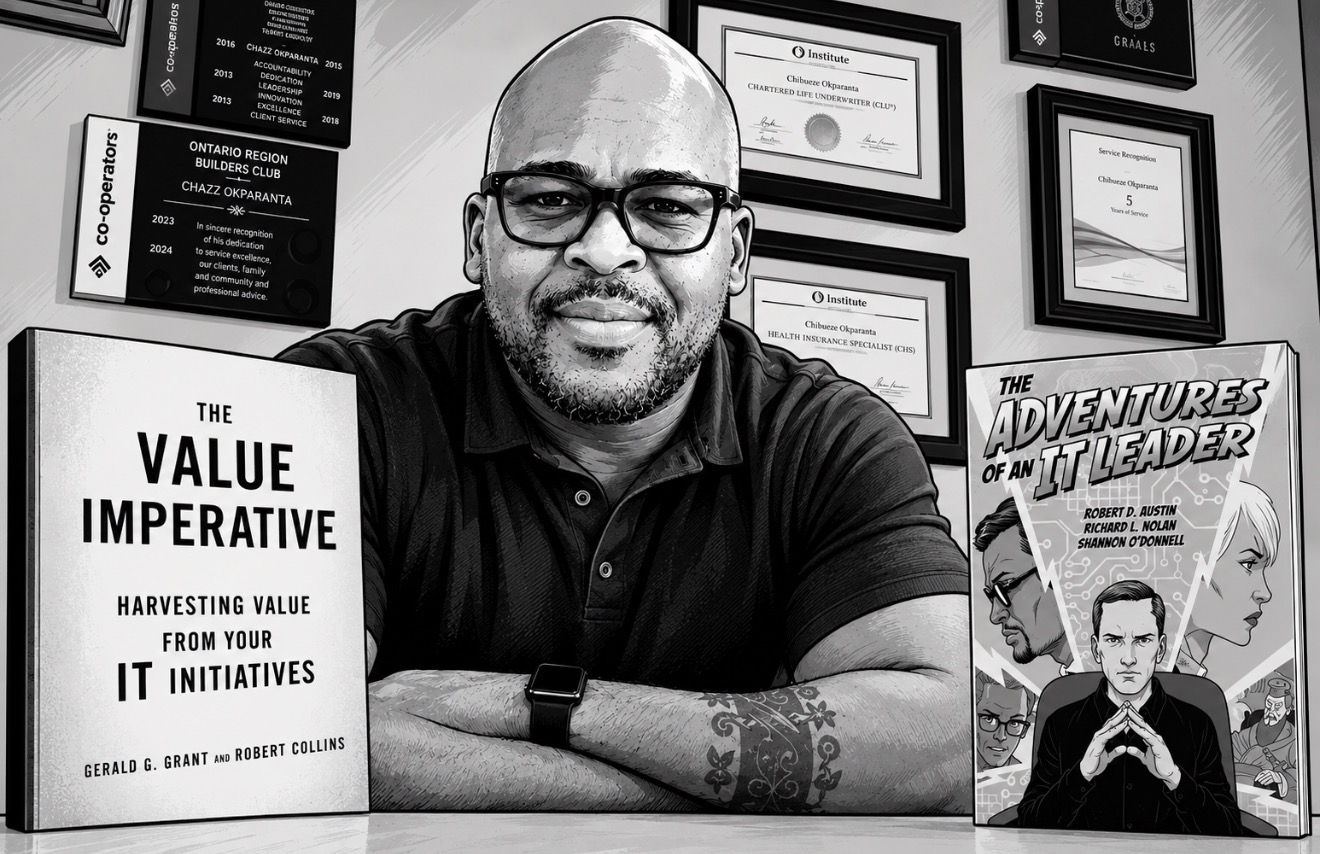
Over the past two weeks, I deliberately stepped away from the constant stream of short-form content and worked my way through two management books: The Adventures of an IT Leader and The Value Imperative. Neither book was about insurance, and neither was particularly concerned with the day-to-day realities of running an agency. Yet both left me thinking about leadership in ways that extended well beyond information technology.
That experience reinforced something I have believed for a long time. The most valuable books rarely teach you about the subject printed on the cover. They teach you how to think.
At first glance, both books appear to be written for technology executives. One follows a newly appointed Chief Information Officer as he learns to lead a function he barely understands. The other examines how organizations create value from technology investments and why so many fail to realize the returns they expected. Read superficially, they are books about IT. Read carefully, they are books about decision making, governance, leadership, organizational behaviour, and strategic thinking.
The most important lesson I took away had very little to do with technology.
Organizations rarely fail because they lack intelligent people. More often, they fail because they allocate resources to the wrong priorities, measure the wrong outcomes, and mistake activity for progress. Leaders naturally focus on the parts of the business they can easily see, while hidden risks quietly accumulate beneath the surface. At the same time, we often assume that expertise means having all the answers, when effective leadership frequently begins by recognizing the limits of our own knowledge and creating an environment where specialists can do their best work.
That idea extends far beyond technology. It applies to every profession. Whether you are leading a business, advising clients, managing investments, coaching a team, or serving a community, the quality of your decisions is shaped less by the volume of information you possess than by the quality of the questions you ask. Intellectual curiosity is not an academic luxury. It is a practical leadership skill.
Perhaps that is why I continue to enjoy reading despite an increasingly busy schedule. Books force us to slow down. They expose us to disciplines outside our own, challenge assumptions we did not realize we were making, and often provide language for ideas we have experienced but never fully articulated.
Ironically, the further I progress in my career, the less interested I become in finding books that promise easy answers. I find myself drawn instead to books that ask better questions.
Those are the ones that tend to change how we lead.





I am a Canadian business owner with a longstanding interest in leadership, strategy and decision making. I write about business, risk, leadership and the systems and incentives that shape how people and organizations make decisions.
Chazz.ca is my personal writing project and a place to explore ideas drawn from experience, education, reading and conversations with people building and leading organizations.
Leave a Reply