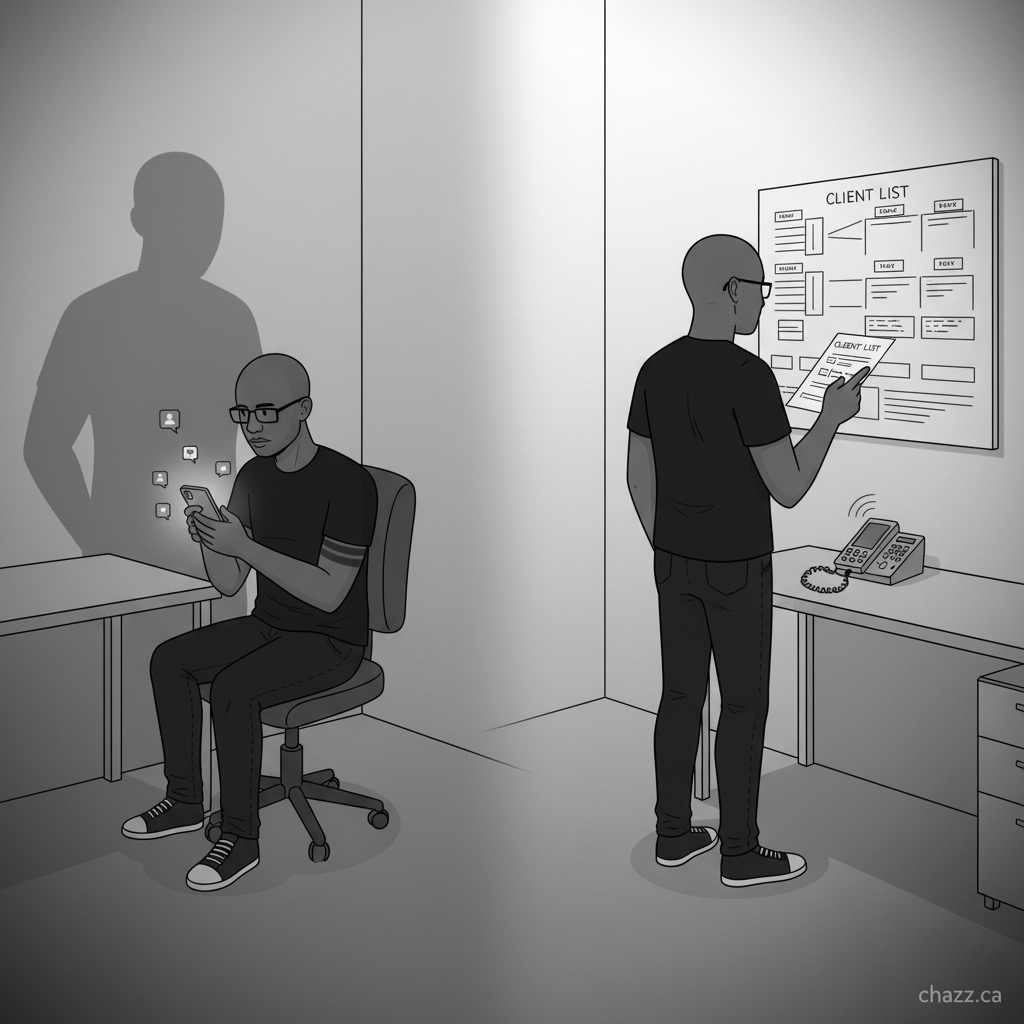
In the beginning, every founder makes the same trade. You trade your autonomy for survival. You accept the “midnight call” and the “veiled threat” as the cost of entry. You tell yourself that being accessible at all hours is your unique value proposition.
This is a debt you are incurring, not a strategy you are building.
The assumption is that “customer centricity” requires absolute submission. The reality is that an expert who is always available is eventually perceived as a commodity.
When a client threatens to move their business because you set a boundary, they are revealing their true assessment of your value. They don’t value your insight; they value your compliance. They aren’t buying your judgment; they are renting your nervous system.
From a resource allocation perspective, these clients are “toxic assets.” They demand high maintenance and provide low margin. The mental energy spent navigating a veiled threat is energy diverted from innovation, strategy, and the clients who actually respect the work.
As an organization scales, the most critical inflection point is the transition from a “growth-at-all-costs” mindset to a “selectivity” mindset.
Scale gives you the liquidity to walk away.
When you have a diversified client base and a robust pipeline, your “BATNA” (Best Alternative to a Negotiated Agreement) becomes your strongest leadership tool. You can finally afford to fire the clients who treat your partnership as a hostage situation.
This is where true balance is found. It isn’t found in a time-management app. It is found in the courage to prune the client list so the rest of the business can breathe.
The consequence of keeping a threatening client is the erosion of your team’s morale and your own intellectual clarity. You cannot lead with vision when you are constantly flinching.
Growth doesn’t just buy you more revenue. It buys you the right to say “No” to the wrong people.
If you are still letting a client’s threat dictate your weekend, are you actually a leader, or are you just a high-level employee of your most difficult customer?





I am a Canadian business owner with a longstanding interest in leadership, strategy and decision making. I write about business, risk, leadership and the systems and incentives that shape how people and organizations make decisions.
Chazz.ca is my personal writing project and a place to explore ideas drawn from experience, education, reading and conversations with people building and leading organizations.
Leave a Reply