The world has a predictable habit of demonizing the marginalized who dare to speak up in the moment. We call them disruptive. We call them difficult. We label them as risks to the status quo. But if you look at the arc of history, it doesn’t just forgive these voices. It vindicates them.
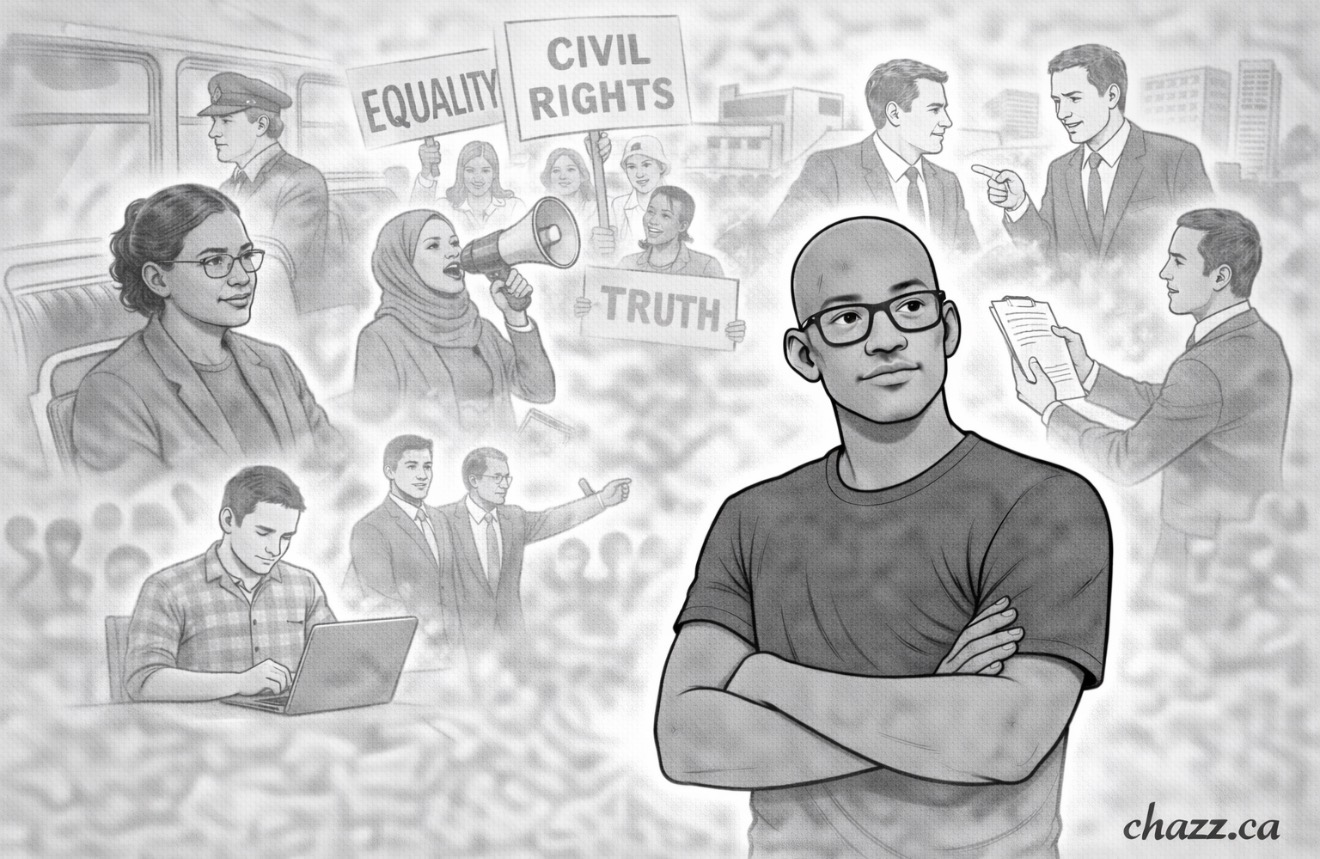
Think about Rosa Parks. In 1955, she wasn’t seen as a hero by the institutions of the day. She was seen as an operational bottleneck. A localized friction point in a systemic flow. Think about the activists of the Civil Rights movement or the whistleblowers who stood against corporate giants. At the time of their defiance, they were treated as liabilities to be managed or silenced by those in power.
From a management perspective, this is a failure of long term risk assessment. Most organizations are optimized for short term compliance. They value the silence that allows the machine to keep running smoothly today, even if that machine is built on a foundation of structural inequality or ethical rot. They confuse quiet with stability.
As a leader, if you view dissent from the marginalized only as a threat, you are missing the most important data point in your operation.
Marginalized voices who stand up are often the early warning systems for systemic collapse. They are the ones identifying the friction points that the majority is too comfortable to notice. In the insurance world, we call this the detection of a latent defect. If you ignore the defect because it is inconvenient to fix, the eventual loss will be catastrophic.
True leadership requires a level of radical empathy that goes beyond a diversity and inclusion checklist. It requires the strategic foresight to realize that the person currently being silenced by the crowd is the one telling the truth about the structural failures of the system.
We ask marginalized people to perform the emotional labor of correcting our institutions while we simultaneously punish them for the disruption. It is a high coordination cost that we force them to carry alone. But the organizations that survive and thrive are the ones that lower that cost by listening before the crisis hits.
History doesn’t remember the people who were polite enough to stay silent while justice was being delayed. It remembers the ones who had the courage to be a signal in a world of static.
Don’t mistake the current consensus for the ultimate truth. Your job as a strategist is to look past the immediate noise and ask yourself who the system is working hardest to silence today. Because that is exactly where you will find the truth that history will eventually validate.
Are you building a culture that rewards compliance, or are you building one that is resilient enough to hear the truth from the people who need it most?




I am a Canadian insurance and investment professional and the President and Chief Executive Officer of Chazz Financial Inc. and Chazz Capital Assets. I write about leadership, markets, insurance, investing, and decision making, with a focus on how structure and incentives shape outcomes.
I hold a business degree and I am a Fellow of the Canadian Securities Institute (FCSI®), a Chartered Life Underwriter (CLU®), a Chartered Financial Planner®, a Certified Health Specialist and a Mutual Fund Investment Representative.
Leave a Reply