There’s an assumption people carry into decisions that rarely gets questioned.
That with enough time, enough information, and enough analysis, the “best” answer will reveal itself.
It sounds reasonable. It’s also not how decisions actually get made.
In practice, most decisions stop at the point where they feel acceptable. Not perfect. Not optimal. Just good enough to move forward.
That’s not laziness. It’s how the system works.
The cost of continuing to search eventually outweighs the value of a better answer. At some point, more thinking doesn’t improve the decision. It just delays it.
So people stop.
What’s interesting is not that this happens. It’s that people still tell themselves a different story.
They describe their decisions as if they were the result of careful optimization. As if every option was considered and the best one selected.
But if you look closely, that’s not what happened.
A threshold was met. And once it was met, the search ended.
The problem is not that people settle.
The problem is that they settle without realizing where that threshold is.
Because once you stop looking, whatever information got you there starts to matter more than it should.
The first number you saw. The first explanation that made sense. The option that felt familiar.
Those aren’t always the best signals.
They’re just the ones that showed up early.
That’s where most decision errors come from.
Not from a lack of intelligence, but from a lack of awareness about how the decision was made.
People think they’re evaluating.
They’re often reacting.
Strong operators don’t try to eliminate this. You can’t.
They just make the process visible.
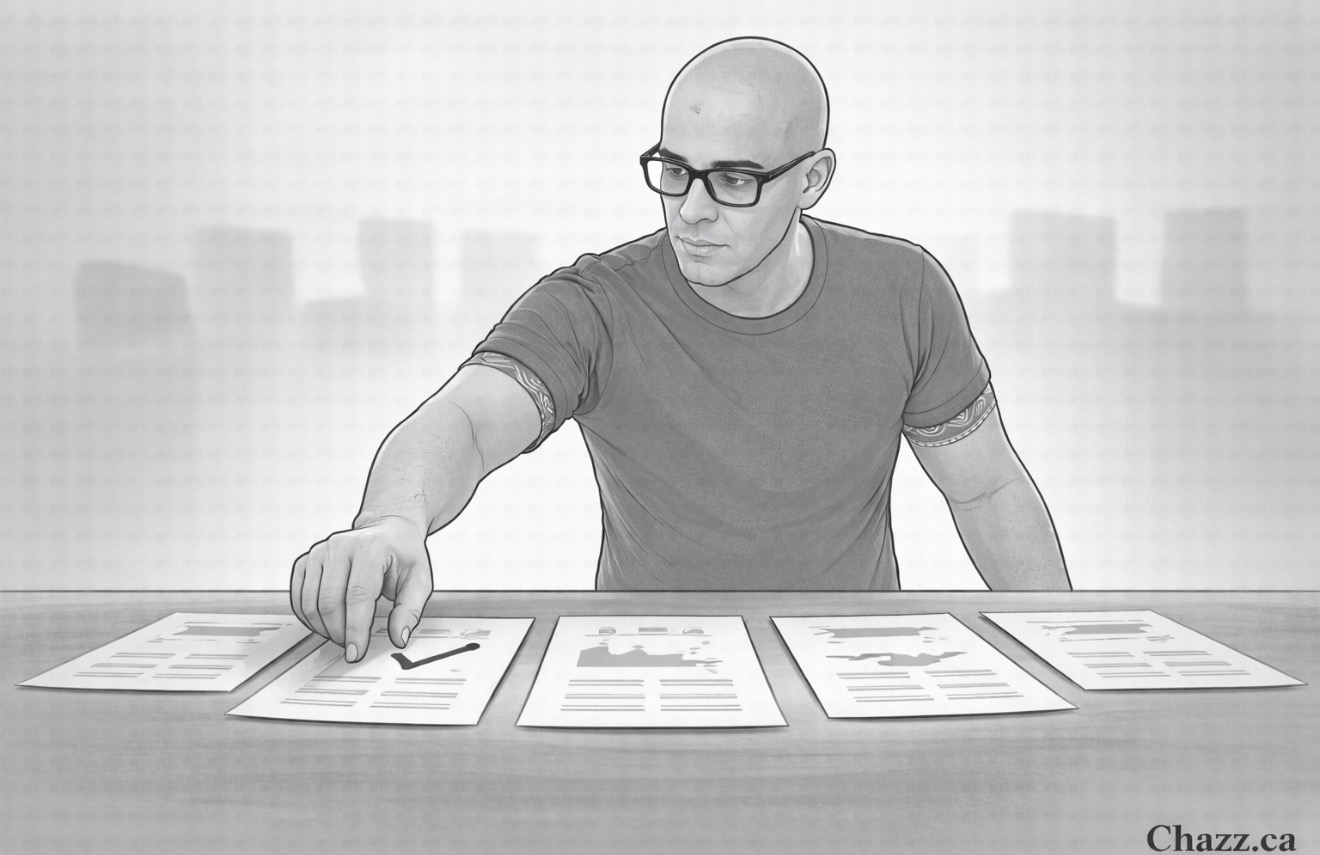
They know they’re not searching for perfect answers. They’re watching for the moment something crosses the line into “good enough.”
And then they pressure test that moment.
Why this option?
Why now?
What got ignored along the way?
Because once you can see the threshold, you can control it.
And once you can control it, you stop mistaking the first acceptable answer for the right one.
Most decisions don’t fail because people didn’t think enough.
They fail because people didn’t understand when they stopped thinking.
That’s a different problem.
And it’s the one that matters.





I am a Canadian business owner with a longstanding interest in leadership, strategy and decision making. I write about business, risk, leadership and the systems and incentives that shape how people and organizations make decisions.
Chazz.ca is my personal writing project and a place to explore ideas drawn from experience, education, reading and conversations with people building and leading organizations.
Leave a Reply