When the first automobiles appeared on city streets, the consensus was clear. The car was a noisy and unreliable novelty that would never replace the dependable horse and carriage. Critics did not just doubt the technology. They clung to the familiarity of the animal. They mistook a century of tradition for a permanent law of physics.
In the insurance industry today, we are witnessing a similar psychological defense mechanism regarding Artificial Intelligence.
The fear that AI will make the human advisor redundant is understandable but it misses the actual shift occurring in the market. We are moving from an era where value was found in the dissemination of information to an era where value is found exclusively in the establishment of trust.
For decades, the product in insurance and advisory was advice. We were paid to know things the client did not know. But as information became a commodity through search engines and now through generative models, the premium for knowing has evaporated. AI is already capable of giving advice that is as accurate and unbiased as any human expert. If you are still trying to sell information as your primary product, you are fighting to keep a horse and carriage service alive in the age of the combustion engine.
The real dislocation is not that AI will replace the person. It is that AI will commoditize the technical portion of the job. This leaves only the human portion as a differentiator.
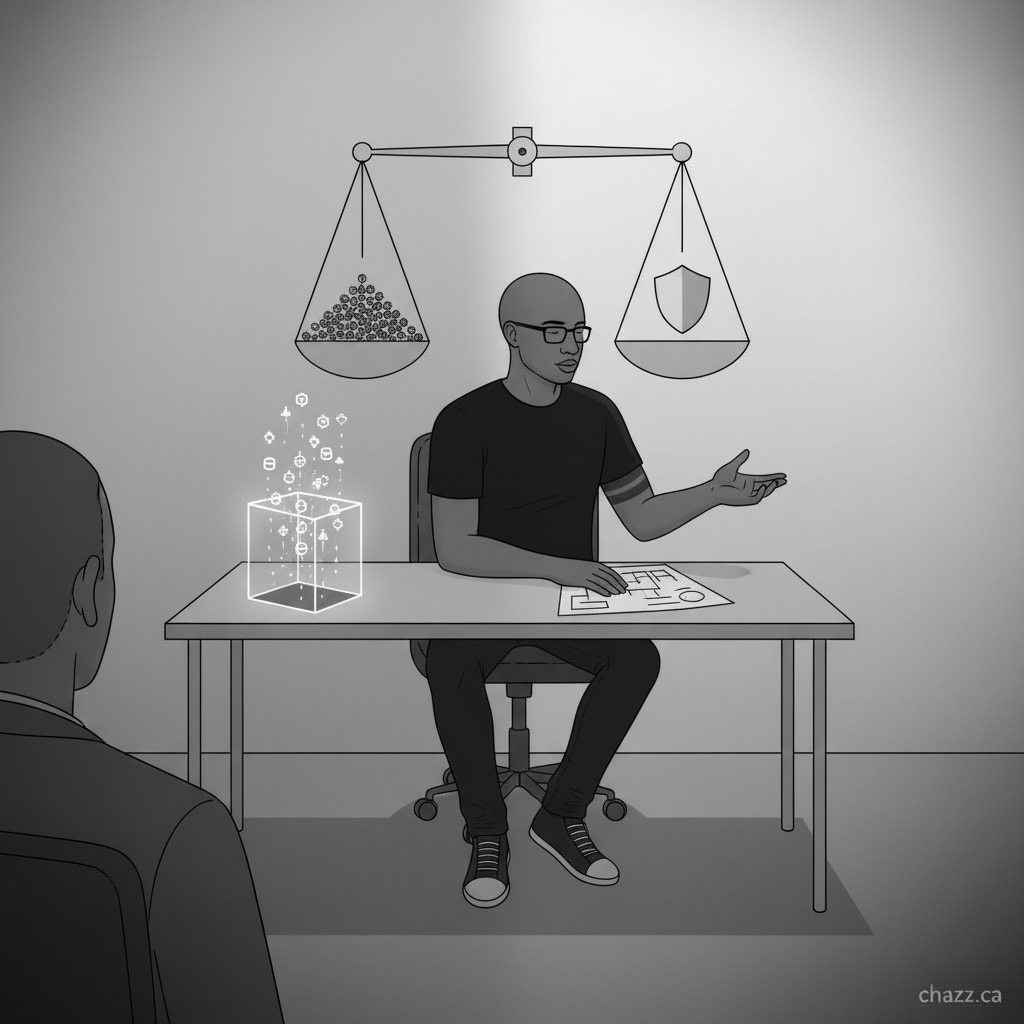
Trust is the only sustainable asset in a world of superintelligence. A machine can provide the most efficient risk allocation model in history. However, it cannot yet carry the emotional weight of a client fear. It cannot look a founder in the eye during a crisis and provide the psychological assurance that the plan will hold. In the immediate future, the gap we fill is the trust gap.
From a strategy perspective, this changes the nature of risk itself. We are moving from static risk which could be managed with historical tables to dynamic risk which requires real time adaptation. The benefit of AI in our industry is the ability to process these massive shifts in information overload. The leaders who thrive will be those who use AI to handle the dissemination of data while they focus on the high level judgment that only comes from earned trust.
Change is inevitable. Dislocation is a certainty. The most successful leaders do not hide from the car. They learn to drive it. They understand that while AI may eventually surpass any trust obstacles that exist today, the current opportunity lies in being the bridge between the machine accuracy and the client need for a human touch.
If you are afraid of the technology, you are ignoring the limitation that creates your greatest advantage. AI can give the advice but it cannot yet own the relationship.
Are you spending your time protecting your advice or are you building the trust that no algorithm can replicate?




I am a Canadian business owner with a longstanding interest in leadership, strategy and decision making. I write about business, risk, leadership and the systems and incentives that shape how people and organizations make decisions.
Chazz.ca is my personal writing project and a place to explore ideas drawn from experience, education, reading and conversations with people building and leading organizations.
Leave a Reply