Risk rarely announces itself with numbers first. It shows up as discomfort.
A conversation that feels rushed. A plan that looks neat but doesn’t quite fit the person sitting across from you. A decision that makes sense on paper but leaves you unsettled. Most experienced professionals recognize this moment. Something is off, even if the spreadsheet says everything is fine.
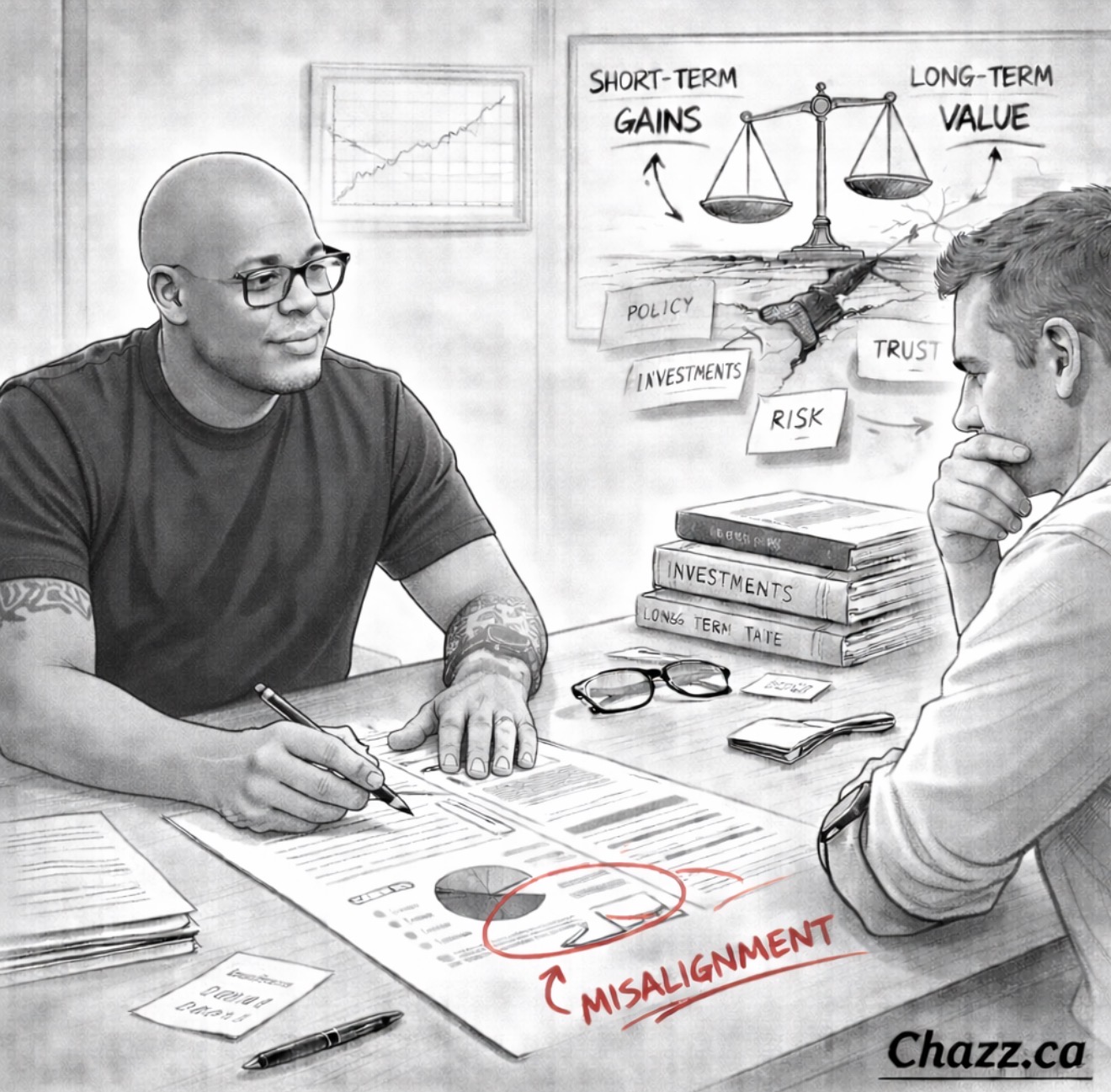
I had a meeting recently where all the inputs appeared reasonable. Coverage existed. Investments were in place. The structure was familiar. But the alignment was not there. The intent behind the decisions and the reality of the person’s goals were drifting apart. It was subtle. Nothing dramatic. Just a growing gap between what had been set up and what was actually needed. That is where risk begins. Not in catastrophe. In misalignment.
In management and strategy, we talk about signal detection. The earliest signals are rarely quantitative. They are behavioral. Emotional. Contextual. The client hesitates. The timeline shifts. The assumptions feel inherited rather than intentional. If you wait for hard data, you are already late.
The best operators learn to respect these early signals. They don’t panic. They don’t overreact. They slow the conversation down. They ask better questions. They re-anchor the decision around purpose instead of momentum. Because most risk in business and planning is not technical. It is human.
People make decisions based on what they think they should do. What they were told once. What worked for someone else. Over time, those decisions accumulate into a structure that looks stable but is no longer connected to reality. The danger is not that it fails immediately. The danger is that it continues quietly until a moment of pressure exposes the gap.
From a risk perspective, this is where judgment matters most. Anyone can run numbers. Anyone can compare products. The real value is in recognizing when the numbers are solving the wrong problem.
That takes experience. It takes listening. And it takes the discipline to say pause when everything around you is pushing for speed. Leadership lives in those moments. Not in the dramatic rescue. In the quiet correction.
Because when you realign early, you prevent the failure that never needs to happen. You protect the relationship before it fractures. You build trust by showing that you are not just processing information. You are interpreting it.
The strongest professionals I know trust that instinct. Not blindly. But respectfully. They investigate it. They test it. They let it guide the next question instead of ignoring it in favor of efficiency.
Risk management at its highest level is not paperwork. It is awareness. It is knowing that the first sign of trouble is rarely a red flag. It is usually a quiet feeling that something no longer fits.
Where in your work are you ignoring that signal because the numbers still look acceptable?


I am a Canadian business owner with a longstanding interest in leadership, strategy and decision making. I write about business, risk, leadership and the systems and incentives that shape how people and organizations make decisions.
Chazz.ca is my personal writing project and a place to explore ideas drawn from experience, education, reading and conversations with people building and leading organizations.
Leave a Reply