In almost every field, the majority of rewards flow to a relatively small group of people. Not the once in a generation superstar. Not the mythical one percent. But the people who consistently operate near the top of their field.
Roughly the top five percent.
That group is not defined by luck alone. It is defined by choices.
The most successful business owners I know do not just work harder. They think differently about the structure of their businesses. They make decisions that look boring in the moment but compound over time. They invest in systems. They protect downside risk. They remove fragility from their operations.
In strategy terms, they build resilience before they chase expansion.
This becomes obvious when you look at how different companies approach risk.
One owner views insurance as a cost to minimize. The objective is to get the cheapest possible policy, check the box, and move on. The decision feels efficient in the short term, but it ignores the structure of the risk itself. If a loss occurs, the business may discover that the coverage was misaligned, incomplete, or outdated.
Another owner treats risk management as part of leadership. They review their exposures regularly. They understand how liability can affect their personal assets, their employees, and their long term plans. They ask better questions about structure, limits, and continuity.
The difference between those two approaches rarely shows up immediately. Both businesses operate normally day to day. Both owners feel confident.
The difference appears when something unexpected happens.
In risk management we talk about asymmetry. A single event can erase years of progress if the foundation underneath the business is weak. A lawsuit, a fire, a cyber incident, or the loss of a key person can change the trajectory of a company overnight.
The top five percent understand this. They do not assume stability. They design for it.
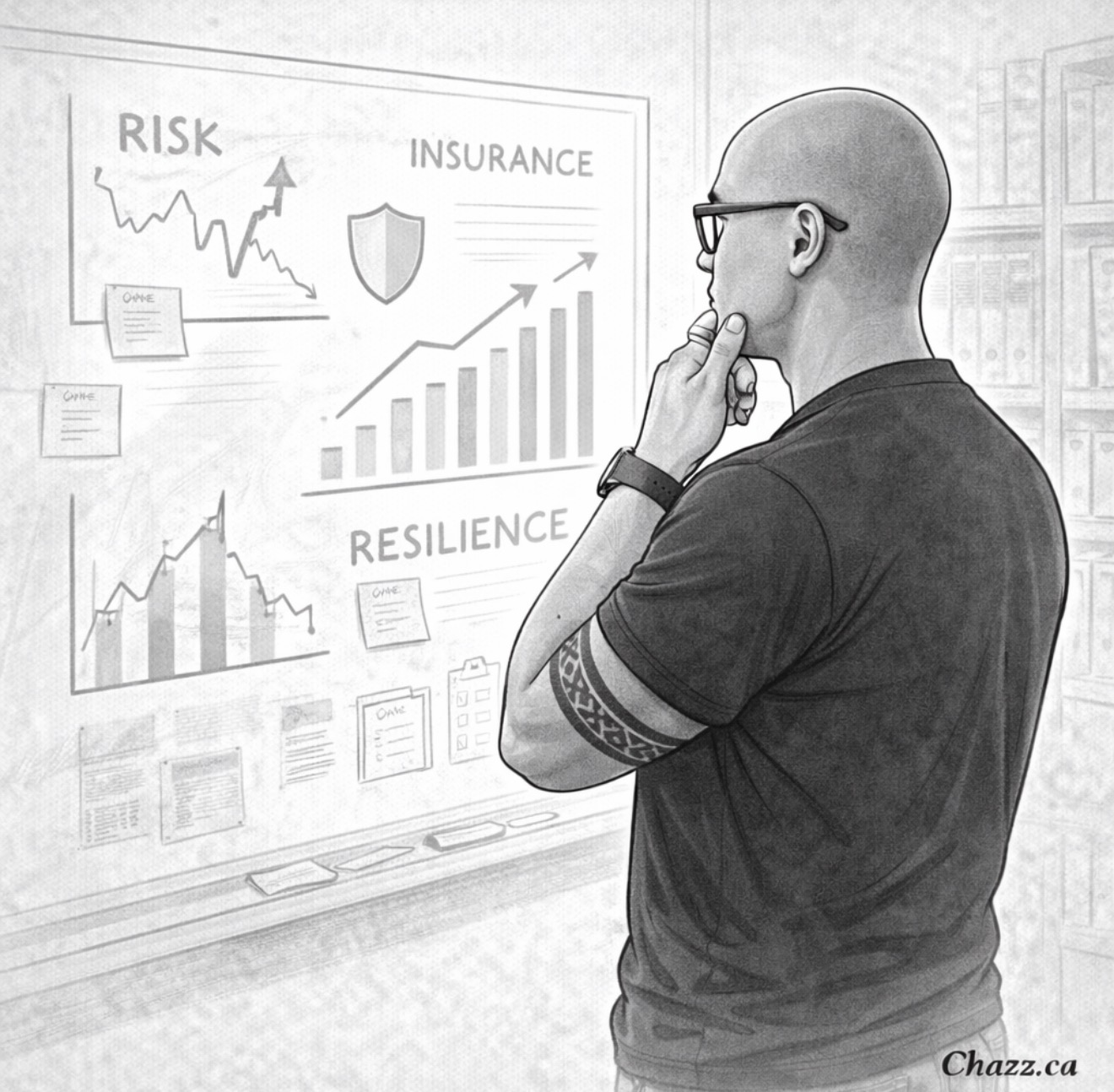
They recognize that insurance is not just paperwork. It is a strategic tool that protects momentum. It ensures that one event does not undo a decade of work. It gives the owner the ability to recover and continue instead of starting over.
This is not about fear. It is about discipline.
The difference between an average operator and a top tier one often comes down to a series of quiet decisions. Choosing advisors who challenge assumptions. Reviewing policies before renewal instead of after a loss. Aligning protection with how the business actually functions, not how it functioned five years ago.
Those decisions are rarely glamorous. They do not produce headlines or applause.
But they are the decisions that keep businesses standing when others disappear.
The truth is that becoming part of the top five percent in your field does not require magic. It requires clarity about the choices you are making and the risks you are accepting without realizing it.
The question every business owner eventually has to ask is simple.
If something serious happened tomorrow, would the structure you built protect what you spent years creating?
The leaders who thrive are the ones who ask that question before the event forces them to.





I am a Canadian business owner with a longstanding interest in leadership, strategy and decision making. I write about business, risk, leadership and the systems and incentives that shape how people and organizations make decisions.
Chazz.ca is my personal writing project and a place to explore ideas drawn from experience, education, reading and conversations with people building and leading organizations.
Leave a Reply