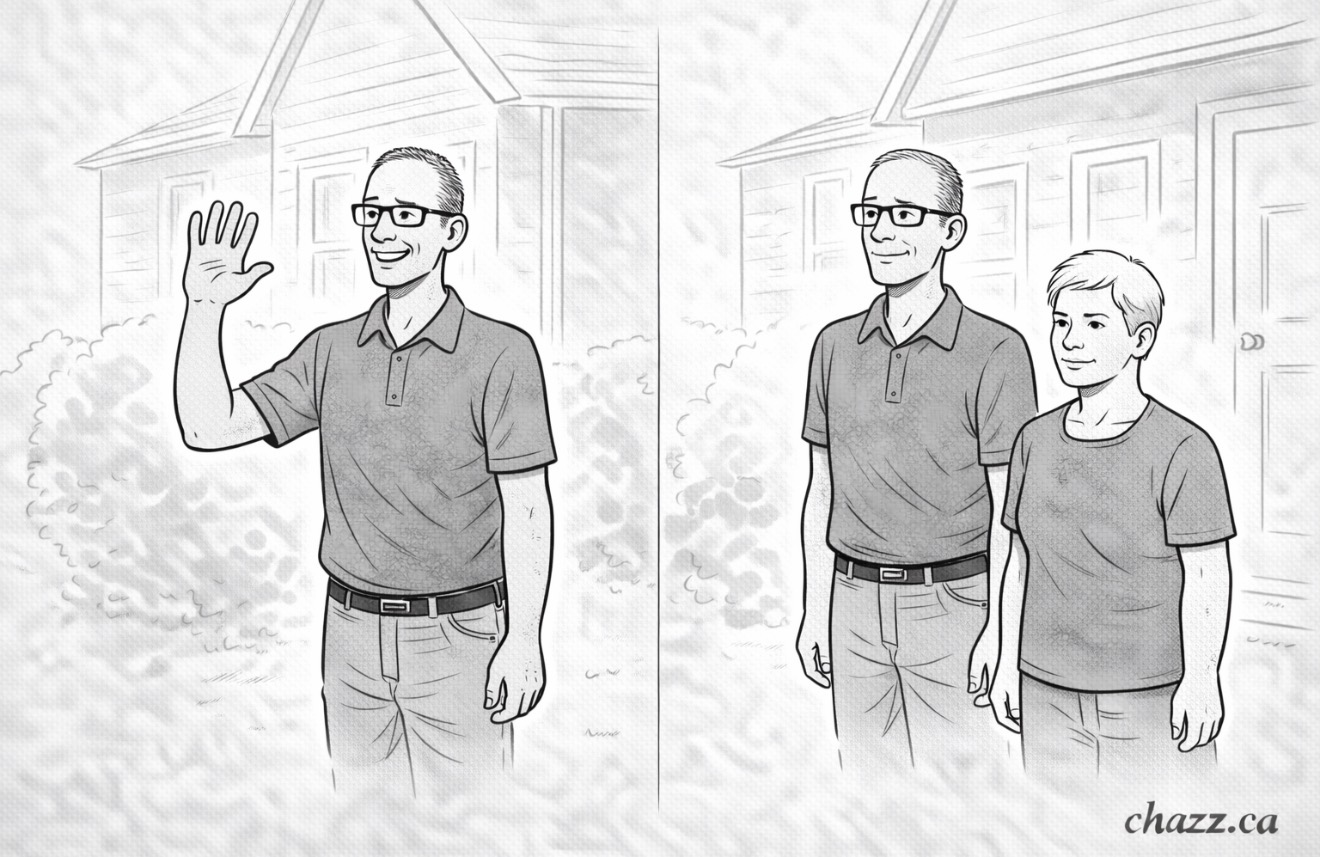
I have a neighbor who does something fascinating. When he is outside alone, he smiles, waves, and says hello like a normal human being. The moment his wife appears beside him, he goes completely silent. No wave. No nod. Nothing. It is as if a switch has flipped and the safest option is total compliance through invisibility.
At first I thought it was awkward. Then I realized it was familiar.
This is the same behavior you see in organizations where people only perform when leadership is watching. When the boss is present, procedures are followed perfectly. Emails are answered quickly. Meetings run on time. When the boss leaves, the system quietly reverts to whatever actually feels easiest.
This is a classic case of information asymmetry. Leadership believes work is happening one way because that is what they see when they are in the room. Employees know what really happens when no one is watching. The gap between those two realities is where risk lives.
To compensate for that gap, organizations rely on presence. Managers walk the floor. Leaders check in constantly. Oversight increases. This creates agency costs. Time and energy are spent managing optics instead of outcomes. People optimize for looking compliant rather than becoming competent.
When that happens, you have not built a culture. You have built a theater.
This is bad for the individual because they never develop true mastery. They learn how to perform under observation, not how to operate with integrity. Their growth stalls because they are rewarded for visibility, not judgment.
It is catastrophic for the organization because leadership develops a false sense of security. Everything looks fine when they are present, so they assume it is fine all the time. Real risks remain hidden. Problems are deferred. And operational integrity depends on one or two people being in the room.
That creates key person risk. If the leader leaves, the standards leave with them.
Great management works in the opposite direction. It focuses on incentive alignment so people behave the same way whether anyone is watching or not. It builds a culture of the unseen, where standards are internalized and decisions are made correctly even in silence. That is when systems become resilient instead of fragile.
Which brings me back to my neighbor.
Maybe he is just managing his own internal compliance department with extreme caution. Or maybe he does not realize that inconsistency is a major red flag for any long term brand. Either way, if you only wave when no one is watching, someone is eventually going to notice.




I am a Canadian insurance and investment professional and the President and Chief Executive Officer of Chazz Financial Inc. and Chazz Capital Assets. I write about leadership, markets, insurance, investing, and decision making, with a focus on how structure and incentives shape outcomes.
I hold a business degree and I am a Fellow of the Canadian Securities Institute (FCSI®), a Chartered Life Underwriter (CLU®), a Chartered Financial Planner®, a Certified Health Specialist and a Mutual Fund Investment Representative.
Leave a Reply