There is a persistent assumption in how people think about teams. If you put enough capable individuals together, the outcome should improve. More talent, more intelligence, more experience. It feels additive, almost inevitable. In practice, it rarely works that way.
Most teams are not limited by a lack of individual strength. They are limited by how those strengths are understood and coordinated. People bring different capabilities, but they also bring different ways of thinking about work, different tolerances for risk, and different definitions of what a good outcome looks like. If those differences are not made explicit, they do not complement each other. They interfere with each other.
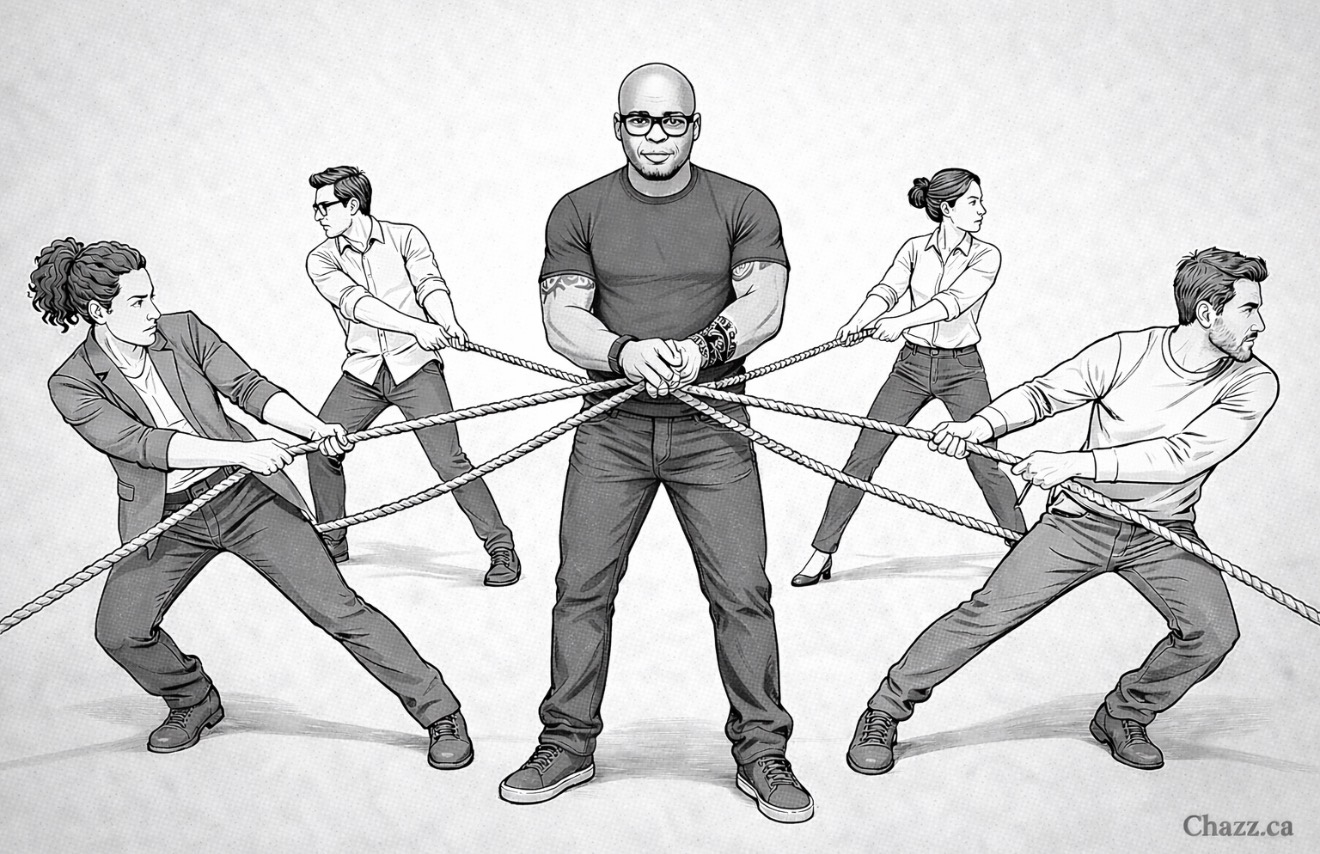
This is where teams quietly break down. Not through obvious conflict, but through subtle misalignment. One person pushes for speed, another for precision. One prefers to move with incomplete information, another needs structure before acting. Individually, each approach is valid. Collectively, without clarity, they create friction that slows everything down.
The typical response is to standardize. Build tighter processes, define roles more rigidly, and try to align everyone around a single way of operating. It creates consistency, but it also removes the very differences that were supposed to make the team stronger in the first place. The result is a group that is easier to manage but less capable of adapting.
A strengths-based approach is often reduced to the idea that people should focus on what they are good at. That is only part of it. The more important question is how those strengths interact. Where do they reinforce each other, where do they create tension, and where do they leave gaps that no one is addressing?
Every strength comes with a constraint. Someone who moves quickly will overlook detail. Someone who is highly analytical will slow the pace of decision making. Someone who builds consensus may avoid necessary tension. These are not problems to eliminate. They are tradeoffs to manage deliberately.
Strong teams understand this and design around it. They know who is driving decisions, who is challenging assumptions, and who is refining execution. They do not assume alignment. They define it. That clarity allows differences to function as structure rather than friction.
Cohesion, in that sense, is often misunderstood. It is not agreement and it is not uniformity. It is clarity about how different people contribute to the same outcome. When that clarity exists, individuals stop working at cross purposes and start operating as part of a system.
Most teams never reach that point. They focus on individual performance and assume the collective will take care of itself. It rarely does. The gap between capability and output is usually not a talent problem. It is a coordination problem.
Strong individuals do not automatically create strong teams. Understanding how those individuals fit together does.





I am a Canadian business owner with a longstanding interest in leadership, strategy and decision making. I write about business, risk, leadership and the systems and incentives that shape how people and organizations make decisions.
Chazz.ca is my personal writing project and a place to explore ideas drawn from experience, education, reading and conversations with people building and leading organizations.
Leave a Reply