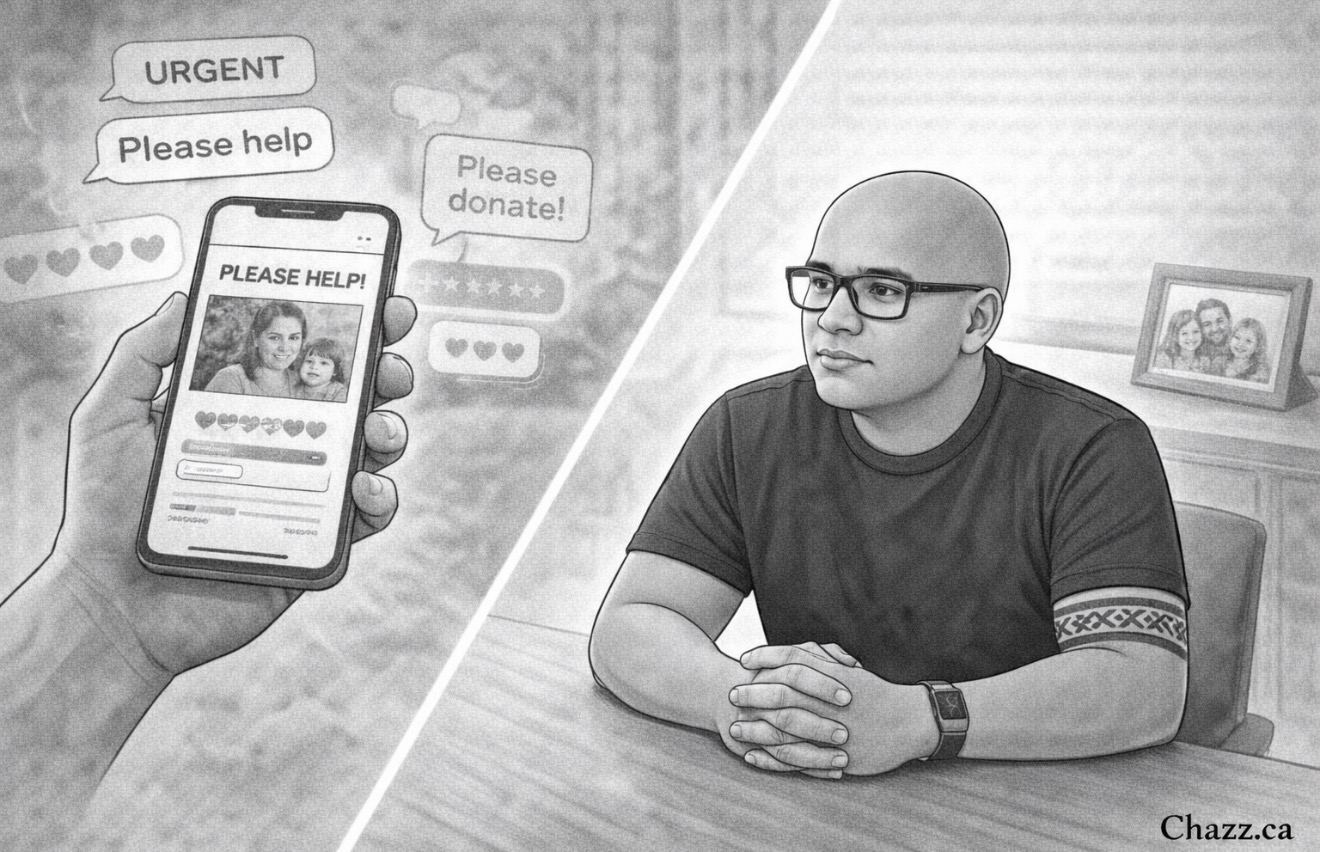
I see them almost every week now.
A link gets shared. A short story follows. Something unexpected has happened. An illness, an accident, a loss. The tone is always the same. Urgent. Emotional. Real. And then the ask. Please help.
I am not against crowdfunding. In many cases it is people stepping up for each other, which is something worth respecting. Communities showing up in difficult moments is one of the better parts of human behavior.
But if I am being honest, it also makes me uneasy.
Not because of the people asking. Because of what it represents.
When something serious happens, families are often left trying to solve a financial problem at the exact same time they are dealing with an emotional one. That is an incredibly difficult position to be in. Decisions get rushed. Stress multiplies. And the burden does not just sit with the person affected. It spreads across everyone around them.
In business, we do not wait for something to break before we think about how to handle it. We plan for disruption. We build contingencies. We assume that something will eventually go wrong and we prepare for it in advance.
In our personal lives, we often avoid that same discipline.
It is not because people are careless. Most people care deeply about their families. It is usually because the conversation feels uncomfortable, or distant, or unnecessary in the moment. Everything feels fine today, so it is easy to assume tomorrow will look the same.
But the situations behind those fundraising pages are a reminder that life does not always give notice.
Planning is not about expecting the worst. It is about protecting the people you care about from having to carry both the emotional and financial weight of a crisis at the same time.
There are ways to build that protection gradually. It does not have to be perfect on day one. It does not have to be complex. What matters is that there is some structure in place. Something that reduces the need to rely entirely on goodwill when something serious happens.
Because while generosity is powerful, it should not be the only safety net.
The goal is not to remove community support. It is to make sure your family is not dependent on it at the most difficult moment of their lives.
If there is one takeaway, it is this.
The best time to plan is when everything feels fine.
Because when things are not fine, planning is no longer an option.




I am a Canadian business owner with a longstanding interest in leadership, strategy and decision making. I write about business, risk, leadership and the systems and incentives that shape how people and organizations make decisions.
Chazz.ca is my personal writing project and a place to explore ideas drawn from experience, education, reading and conversations with people building and leading organizations.
Leave a Reply