A chef keeps two suppliers for every critical ingredient. Not because one is unreliable. Because one could be.
That decision changes what happens when something goes wrong. A supplier closes, a shipment is delayed, a price becomes unworkable. The kitchen does not stop. The chef makes a phone call and continues.
The same applies to revenue, relationships and resources. Many businesses depend on one large customer, one key employee, one critical vendor. Each may be strong and reliable. The vulnerability is not about their intentions. It is about what happens if circumstances change.
A contractor with three large clients is safer than one with a single contract worth the same revenue. A manufacturer with four suppliers is more resilient than one with a preferred partner. A business with two people who understand the billing system is less vulnerable than one where only the founder knows how it works.
The difference shows up in two places: whether losing any single customer, supplier or person would stop operations, and whether you could replace them within the time you can afford to wait.
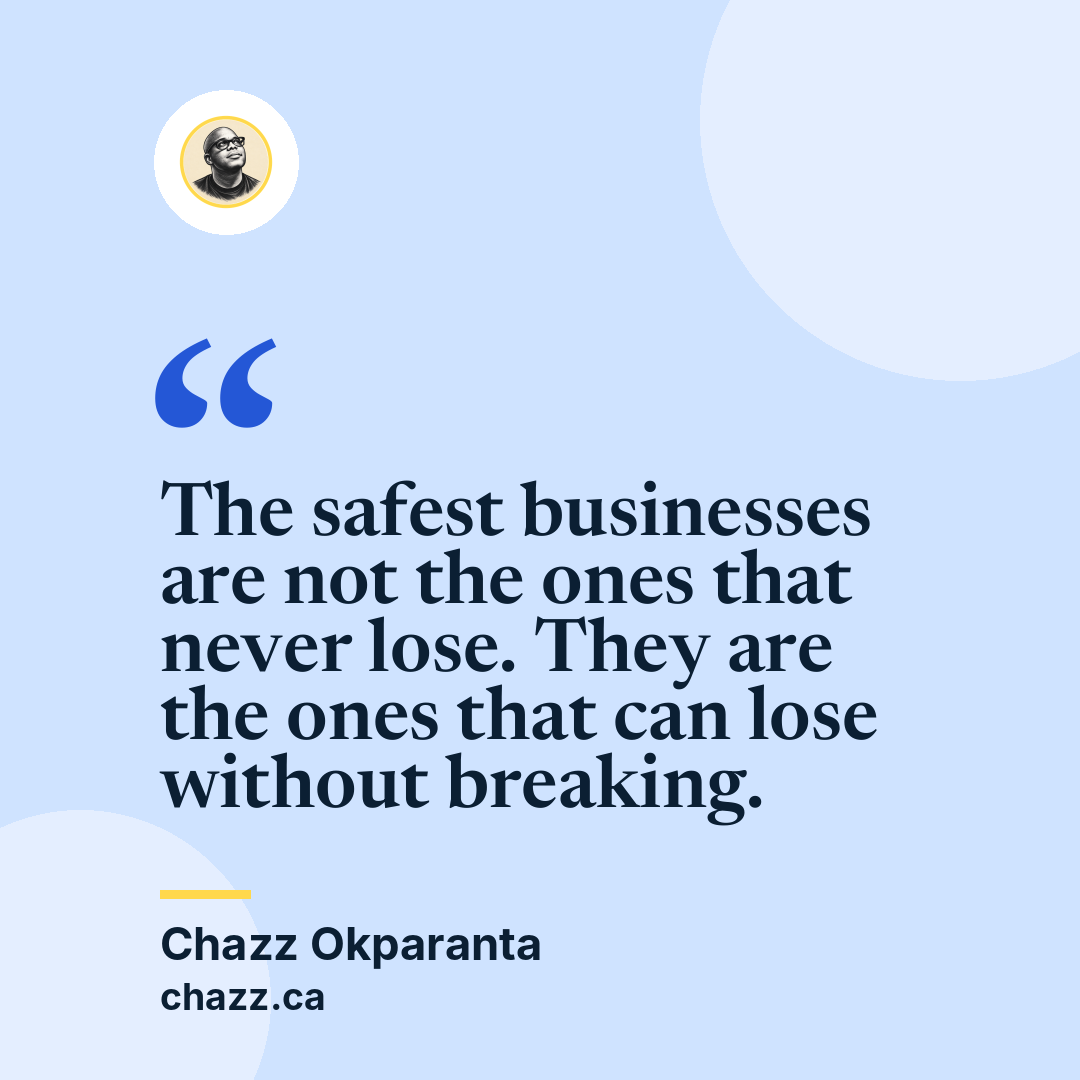
The safest businesses are not the ones that never lose. They are the ones that can lose without breaking.
Des idées à conserver.
Affaires, leadership et pensée claire.