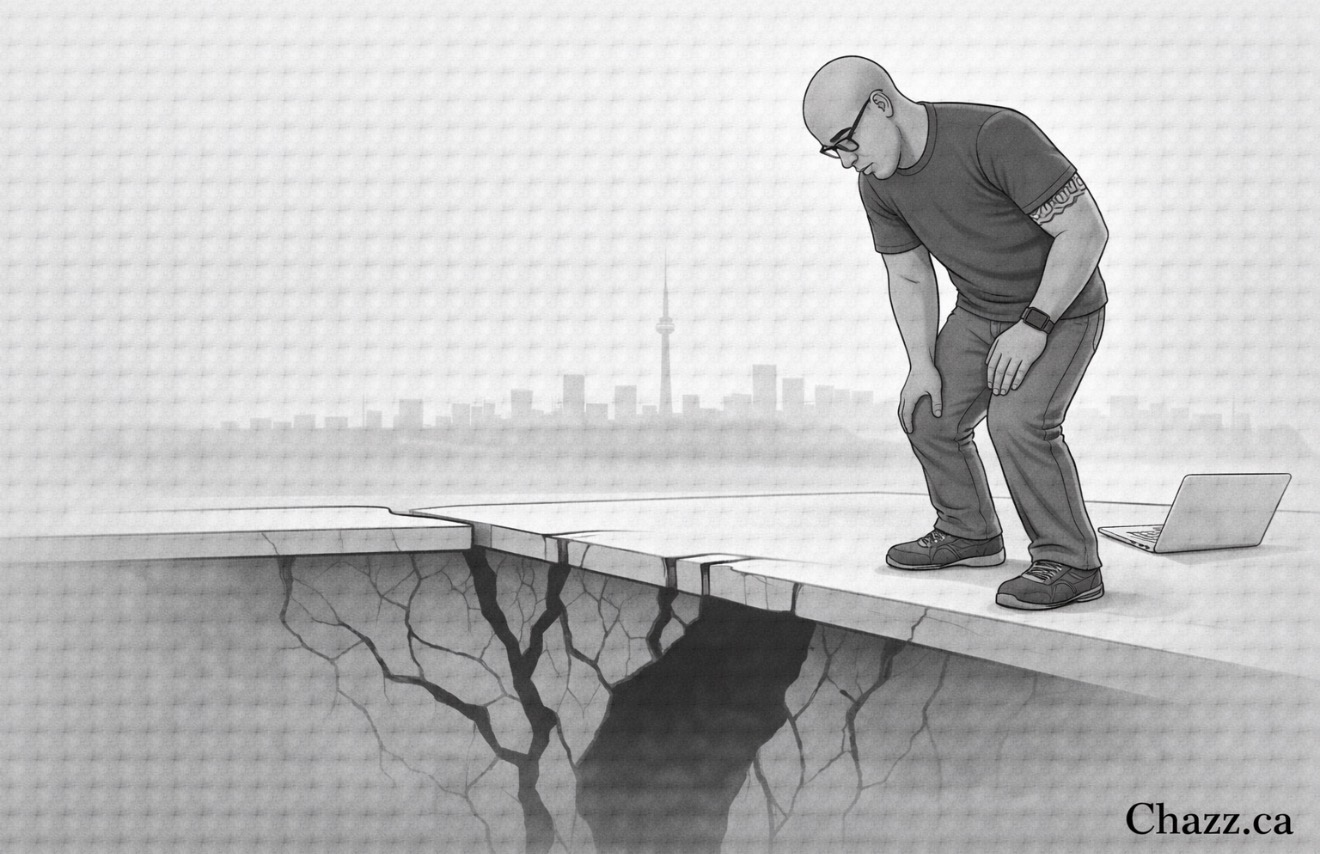
There is a quiet mistake people make when they think about risk.
If something feels unlikely enough, they treat it as if it cannot happen at all.
Not consciously. Not deliberately. But functionally, that is exactly what happens.
In theory, we understand probability. We know that rare events still occur. We know that unlikely does not mean impossible. But in practice, when the odds are low enough, we simplify the world. We round them down to zero.
And once we do that, we stop preparing.
This shows up everywhere.
A business owner assumes a contract will be interpreted “reasonably” because it always has been. A landlord assumes a tenant will act in good faith because they usually do. A family assumes nothing will happen to the primary earner because it hasn’t yet.
Individually, each assumption feels harmless. Collectively, they create exposure.
The problem is not that people are irrational. It is that they are efficient. The human mind is designed to filter out noise, to ignore signals that seem too small to matter. That is useful in most areas of life.
It is dangerous in risk management.
Because risk does not announce itself based on how we feel about it. It does not scale its impact to match how likely we believed it was. It simply materializes when conditions allow it to.
And when it does, the conversation shifts instantly from probability to consequence.
In business, this is where the gap between perception and reality becomes expensive.
Leaders often spend time optimizing for visible differences. The presentation. The brand. The optics of decision making. These are tangible and easy to evaluate. But the real differentiation often lies in what cannot be seen.
The structure behind the agreement. The assumptions embedded in a policy. The contingencies that were either considered or ignored.
Two businesses can look identical from the outside. Similar revenue, similar operations, similar growth trajectory.
But under pressure, they behave very differently.
One absorbs impact and continues forward. The other stalls, sometimes permanently.
The difference is rarely luck.
It is usually the result of decisions made when nothing appeared urgent.
This is the discipline of thinking beyond what is immediately visible. Of acknowledging that small probabilities still carry real outcomes. Of understanding that the absence of past problems is not evidence of future safety.
Good operators do not eliminate risk. That is impossible.
They manage it intentionally.
They make decisions not just based on what is likely, but on what is possible and what the consequences would be if that possibility becomes reality.
Because in the end, risk is not defined by how often something happens.
It is defined by what happens when it does.
And the risks you cannot see, the ones you have mentally rounded down to zero, are often the ones that matter most.





I am a Canadian business owner with a longstanding interest in leadership, strategy and decision making. I write about business, risk, leadership and the systems and incentives that shape how people and organizations make decisions.
Chazz.ca is my personal writing project and a place to explore ideas drawn from experience, education, reading and conversations with people building and leading organizations.
Leave a Reply