Most of us think we are independent thinkers. We believe we are the ones who “do our own research” and see things for themselves. But in the world of information strategy, this is often where the most expensive errors begin.
The reality is that knowledge is not a solo sport. It is a community effort.
When we see a post that makes us angry, or better yet, a post that confirms exactly what we already believe, our brain offers us a “Confirmation Discount.” It stops asking the hard questions. It stops looking for evidence. It just accepts the data as truth because it fits the narrative we’ve already bought into.
In management and risk assessment, this is a catastrophic failure of quality control.
If you only trust information that feels good, you aren’t an independent thinker. You are a consumer being played by an algorithm. Real skepticism isn’t about doubting everything. It is about proportioning your belief to the evidence.
Think about how we handle risk in the insurance world. We don’t just take the word of the person looking for the policy. We look laterally. We check the data against multiple independent sources. We look for red flags like inflammatory language, emotional triggers, or a lack of verifiable history.
Why don’t we do the same with the stories we share on Facebook?
Most people share articles without reading past the headline. They are effectively underwriting a risk they haven’t even audited. They allow repetition to be a substitute for truth. If they hear a lie enough times, they start to assume it has institutional weight.
From a leadership perspective, the most dangerous thing you can do is retreat into a bubble where you only hear what you want to hear. You lose your edge. You lose your ability to see the market as it actually is. You become the easy mark for anyone with a loud voice and a “sponsored” tag.
The goal isn’t to throw in the towel and say you can’t believe anything. The goal is to become a better fact checker of your own emotions.
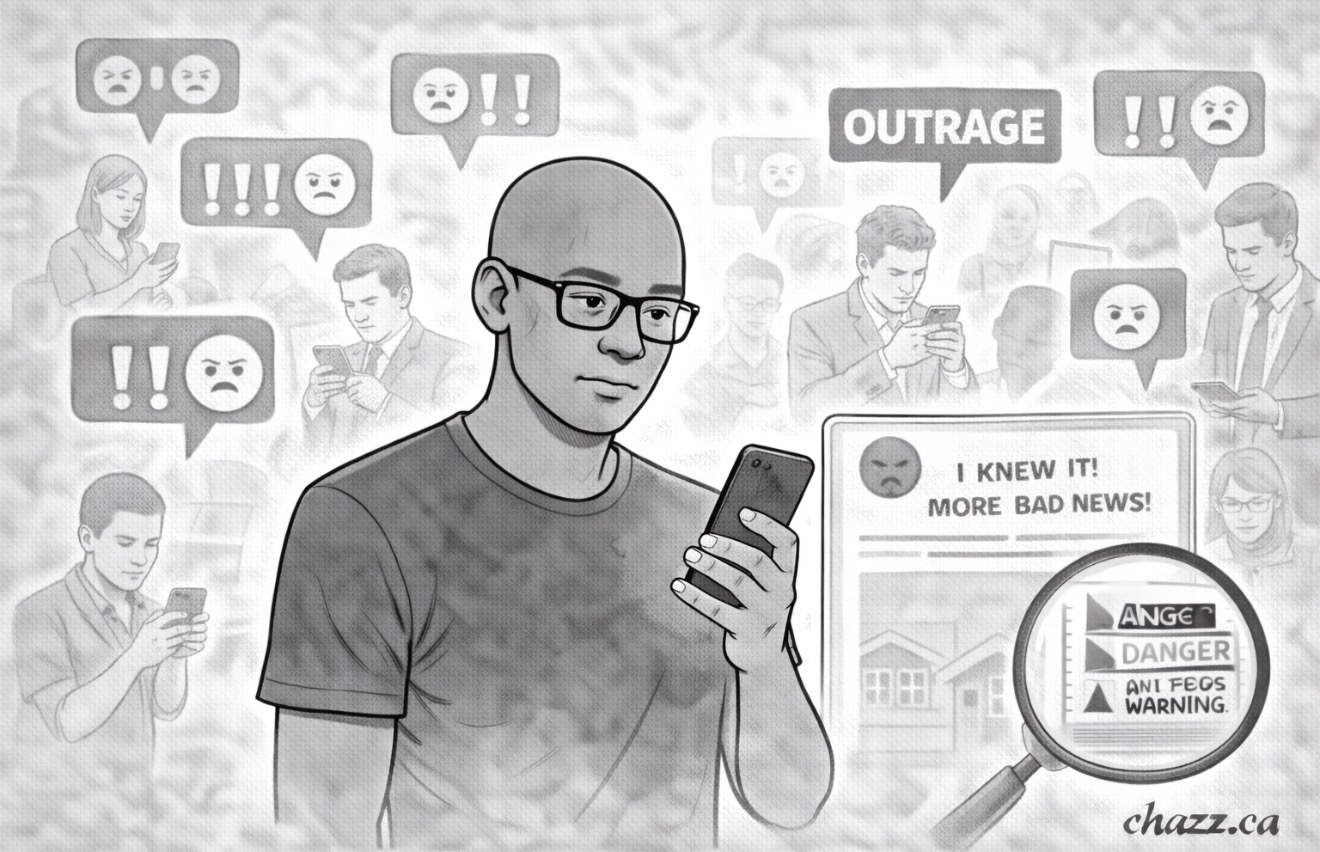
When you feel that surge of outrage or that “I knew it!” moment, that is exactly when you need to pause. Open a new tab. Look at what others are saying. Read laterally. Truth is not afraid of scrutiny. Only propaganda requires you to stay in the dark.
Are you a leader who demands the evidence, or are you just another unpaid intern for the disinformation industry?
The most powerful thing you can do for your personal brand and your organization is to be the person who refuses to be fooled.





I am a Canadian business owner with a longstanding interest in leadership, strategy and decision making. I write about business, risk, leadership and the systems and incentives that shape how people and organizations make decisions.
Chazz.ca is my personal writing project and a place to explore ideas drawn from experience, education, reading and conversations with people building and leading organizations.
Leave a Reply