Technology has made quoting insurance faster than ever. In many cases you can now get a number on your screen in minutes.
Speed feels good. It feels efficient. It feels like progress.
But speed and understanding are not the same thing.
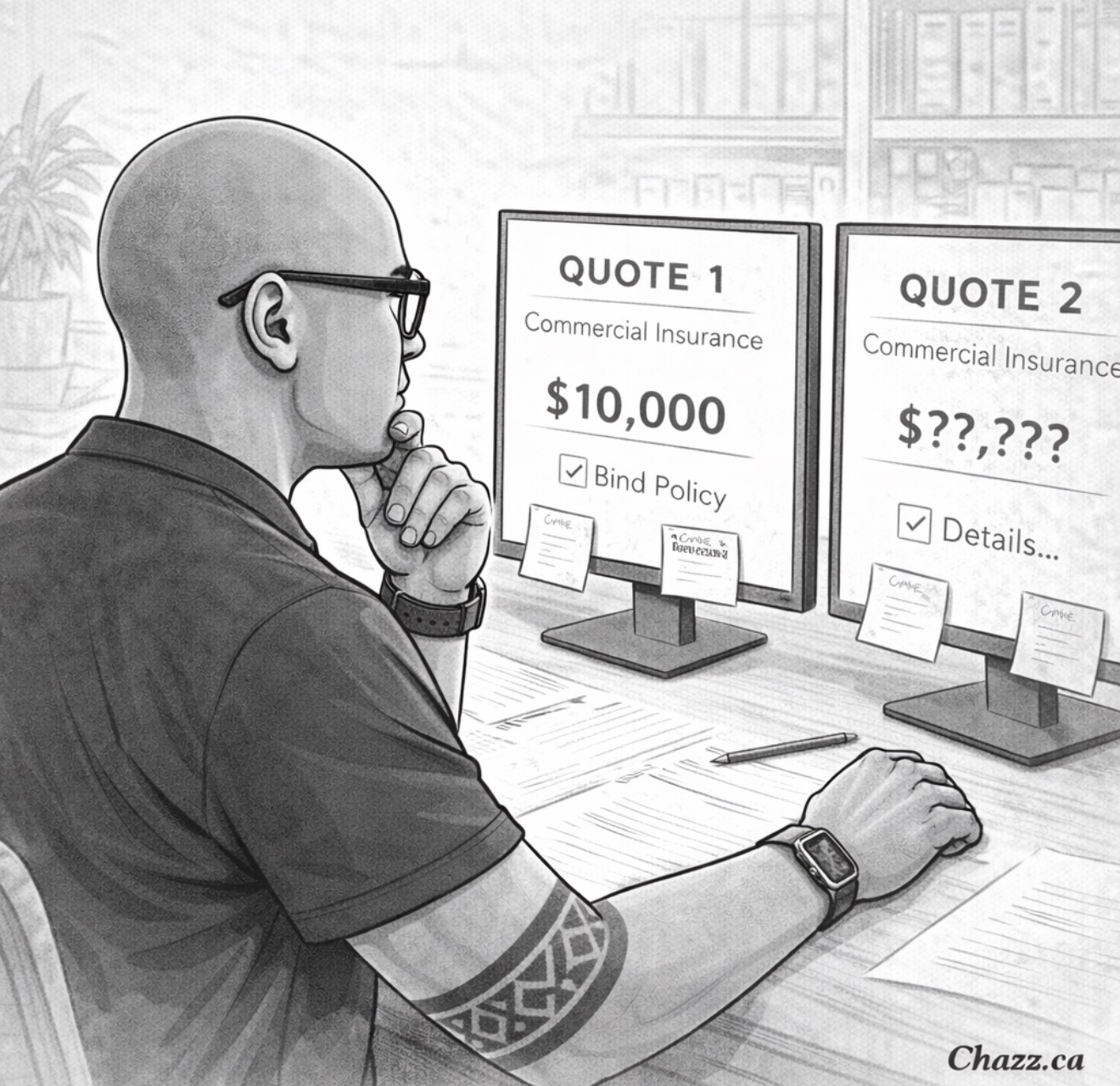
A while back a friend of mine called me about a commercial insurance policy for his business. He had already gone online and found a quote that came back much faster than the one my associate was preparing. The process looked smooth and efficient. A few clicks, a few questions, and a price appeared on the screen.
Naturally he assumed the faster quote was the better option.
Then he tried to bind the policy.
Suddenly nothing matched the original quote. The coverage details were different. The assumptions were different. The price moved. When he called the service center to ask basic questions about the policy wording, the representative could not explain the coverage. Every answer sounded like it was being read directly from a script.
The quote was fast.
The understanding was missing.
This is a perfect example of something we talk about often in strategy and risk management. Businesses love optimization, and the modern world has optimized for speed. Faster answers. Faster transactions. Faster decisions.
But risk does not move at the speed of software.
Understanding how a business actually operates takes time. Reviewing contracts takes time. Identifying exposures takes time. Insurance is not simply a product that sits on a shelf. It is a structure that needs to match the way a company functions in the real world.
When leaders confuse speed with expertise, they create fragile systems.
In management theory we often talk about the difference between efficiency and effectiveness. Efficiency is doing something quickly. Effectiveness is doing the right thing.
A fast quote is efficient.
A well designed insurance structure is effective.
The two are not always the same.
The best business owners understand this. They do not simply ask for a price. They ask better questions. What exactly is covered. What is excluded. What happens if a claim occurs. What happens if the business grows or changes direction.
Those questions cannot be answered by a script.
They require experience, judgment, and real underwriting thought. They require someone who understands how risk behaves in the real world, not just how to generate a number on a screen.
Technology is a powerful tool and it has improved the insurance industry in many ways. Faster information can absolutely help move deals forward.
But expertise still matters.
Because the moment a loss occurs, nobody cares how quickly the quote arrived.
They care whether the structure actually worked.





I am a Canadian business owner with a longstanding interest in leadership, strategy and decision making. I write about business, risk, leadership and the systems and incentives that shape how people and organizations make decisions.
Chazz.ca is my personal writing project and a place to explore ideas drawn from experience, education, reading and conversations with people building and leading organizations.
Leave a Reply